This months speaker was Paul Salisbury from the Coventry family history society.

Paul explained how the society collects, transcribes and organises records from a wide array of sources and timeframes to preserve the histories and lives of Coventry residents past. This comes with an array of practical difficulties that have to be considered before taking on a project.
The sources range from the expected birth, deaths and marriages held in parish records (for before the Births and Deaths Registration Act of 1837) through to census records, electoral rolls, apprentice enrolments, school admissions, cemetery records and even pawnbroker tickets. These sources come in different formats which might require specific equipment such as microfiche readers. All of it needs to be eyeballed, interpreted and entered into a laptop.
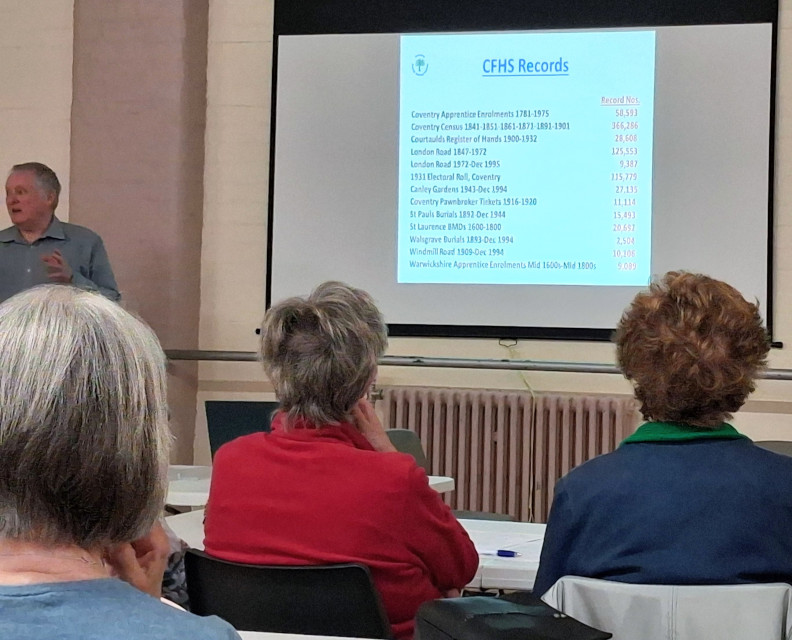
Before taking on a project issues such as the scale of the task need to be considered. There is only so much you can ask of volunteers. And that all assumes your allowed access in the first place!
The result is an archive of the lives of Coventry residents going back to the 1800s drawn from an eclectic range of original records.
As an IT person myself, this is a familiar story. Data, information is considered to 'rot' (sometimes literally in the case of the pawnbroker tickets!) and becomes harder to make use of with time. The effort to transfer from one technology (paper) to another (such a compact disks) is considerable. And it doesn't stop. CD's become obsolete so the society is having to move the data online.
Every time the technology changes, the information becomes at risk from not moving with it. The records are windows to our past and it seems a shame so much is in need of preserving. One day we might regret closing that window.