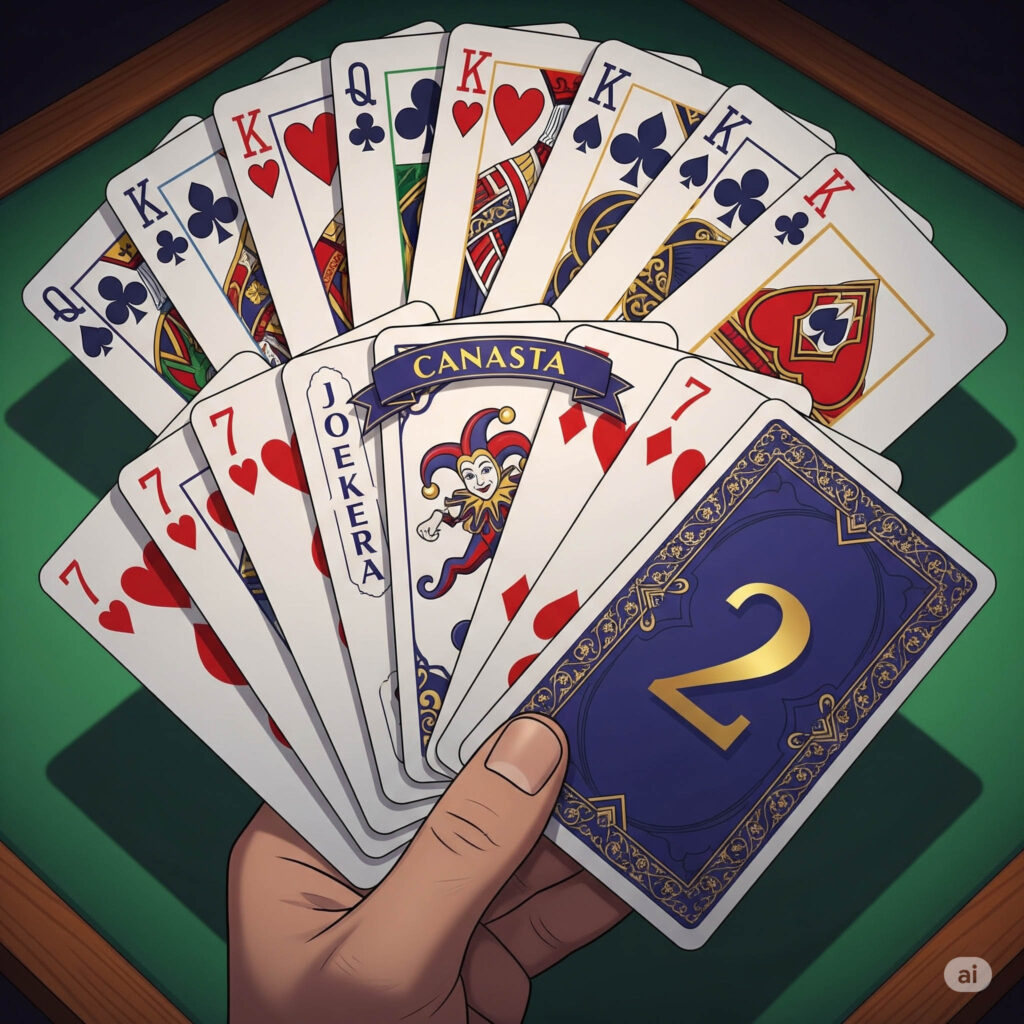
For Novembers general meeting, our speaker was Mike Lister who gave a fascinating talk on the history of playing cards. As a quick show of hands demonstrated they are ubiquitous with many possible games widely played (including our own canasta activity group)
Although disputed, they most likely originated in 9th century China and were originally larger, more elongated and with 3 suits. As they spread through the Middle East to Egypt, up through Spain and France and to England by the 1400s the designs varied, the suits changing to reflect each countries preferences.
Their widespread popularity and ease of use for gambling has led to banns, taxes and claims of immorality. Bizarrely the duty tax was only lifted in the UK in 1960. And it's currently illegal to own more than 120 cards in Thailand.
By the 1850s playing cards had crossed the Atlantic to the USA where mass production to satisfy demand created a more standardised design including the double head court cards, numbers and letters, rounded corners, the courtly Knave being renamed the Jack (so that "KN" wasn't confused with a "K" in a tightly held hand) and the introduction of a wildcard Joker.
Mike displayed a selection of collected packs. Historical packs can be quite rare since they are made of paper and often disposed of when damaged. The oldest surviving deck of 52 playing cards was made in the Netherlands (circa 1475 AD) and is housed in the Metropolitan Museum of Art, New York.
A very interesting talk on a topic with a more complex history than one might initially imagine.